King Charles III says he is reducing cancer treatment schedule in 2026, stresses importance of early detection
Written by ABC Audio ALL RIGHTS RESERVED on December 12, 2025
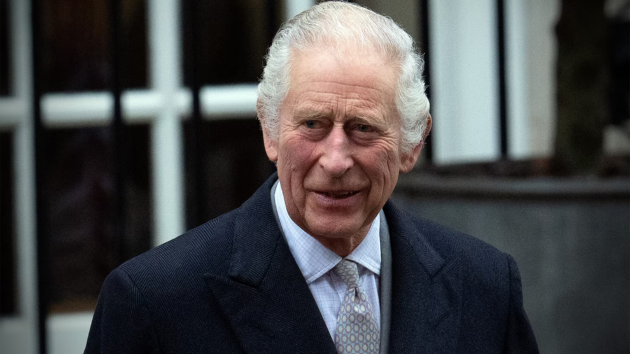
(LONDON) — King Charles III announced in a video message Friday that he will be reducing his cancer treatment schedule in the new year, citing his early diagnosis, and urged others to get screened for cancer early as well.
In a pre-recorded video message released Friday as part of Channel 4 and Cancer Research UK’s “Stand Up To Cancer” night, the monarch shared how early cancer diagnosis and treatment had made a difference for him, “enabling me to continue leading a full and active life, even while undergoing treatment.”
He added that thanks to his early diagnosis and treatment, “my own schedule of cancer treatment can be reduced in the New Year.”
In his video message, Charles also spoke about the importance of cancer screenings and early detection.
The message was shown before a live broadcast from a cancer clinic at Addenbrooke’s Hospital in Cambridge, presented by Davina McCall.
“This is a season when our thoughts turn to celebrations with our friends and families,” Charles said. “In the midst of this festive period, I just wanted to ask you to join me today in finding a special place in your hearts and your minds and prayers for the hundreds of thousands of people across our United Kingdom who receive a cancer diagnosis each year — and for the millions more who love and care for them.”
The king acknowledged that a cancer diagnosis can feel “overwhelming,” citing his own experience, and said that early detection “is the key that can transform treatment journeys, giving invaluable time to medical teams — and, to their patients, the precious gift of hope.”
“Throughout my own cancer journey, I have been profoundly moved by what I can only call the ‘community of care’ that surrounds every cancer patient — the specialists, the nurses, researchers and volunteers who work tirelessly to save and improve lives,” he continued. “But I have also learned something that troubles me deeply: At least 9 million people in our country are not up to date with the cancer screenings available to them. That is at least 9 million opportunities for early diagnosis being missed.”
Charles said the “statistics speak with stark clarity,” noting that for bowel cancer caught at the earliest stage, approximately 9 in 10 people survive for at least five years, according to the U.K.’s National Cancer Intelligence Network.
“When diagnosed late, that falls to just 1 in 10,” the king said.
While Buckingham Palace hasn’t disclosed the type of cancer with which Charles was diagnosed or the type of treatment he has undergone, the monarch said that early detection had made a difference in his own life.
He also called it a “milestone” for him to have his cancer treatment reduced in the new year.
“This milestone is both a personal blessing and a testimony to the remarkable advances that have been made in cancer care in recent years, testimony that I hope may give encouragement to the 50% of us who will be diagnosed with the illness at some point in our lives,” he said.
Charles concluded his message by highlighting the U.K.’s new national cancer screening checker online, which, according to the Stand Up to Cancer website, helps those in the U.K. determine which cancer screening programs are available to them.
“As I have observed before, the darkest moments of illness can be illuminated by the greatest compassion. But compassion must be paired with action,” the king said. “This December, as we gather to reflect on the year past, I pray that we can each pledge, as part of our resolutions for the year ahead, to play our part in helping to catch cancer early. Your life, or the life of someone you love, may depend upon it.”
In February 2024, the palace announced that Charles had undergone a procedure for benign prostate enlargement. Following the procedure and subsequent diagnostic tests, “a form of cancer” was identified, according to a statement from the palace at the time.
Charles’ daughter-in-law, Kate, the Princess of Wales, also announced publicly the following month that she had been diagnosed with cancer and was undergoing chemotherapy. Kate, a mother of three and the wife of Charles’ eldest son, Prince William, has not disclosed the type of cancer with which she was diagnosed. She announced in January that her cancer is in remission.
Since Charles’ diagnosis, the king and his wife Queen Camilla have helped raise awareness about the disease. Earlier this year, they hosted a reception at Buckingham Palace where Charles spoke about his cancer diagnosis and treatment and thanked researchers, health care workers and more for their commitment to early diagnosis.
To learn more about cancer screening suggestions specific to U.S., please visit the American Cancer Society website.
Copyright © 2025, ABC Audio. All rights reserved.