Munition used in Sept. 2 boat strike was intended to kill people, top Democrat says
Written by ABC Audio ALL RIGHTS RESERVED on December 12, 2025
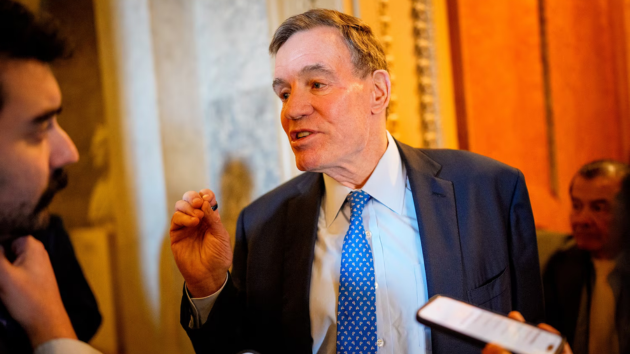
(WASHINGTON) — Sen. Mark Warner, the top Democrat on the Senate Intelligence Committee, told reporters on Friday that the type of munitions used by the military in a Sept. 2 boat strike — including on survivors in a second strike — were “anti-personnel” and designed to ensure the people on board did not survive, not just stop the drug shipment.
In question has been whether Defense Secretary Pete Hegseth’s orders to the military was to kill the people on board, stop the drug shipment — or both.
Warner, who has received classified briefings on the strike, also said that U.S. intelligence identified all 11 people on board and each person killed was linked to the drug trade, although the level of their involvement was unclear.
“It’s one thing to be a ‘narco-terrorist’ and another thing to be a fisherman that’s getting paid 100 bucks [who a] couple times a year, runs on one of these boats to supplement his income,” Warner said at a Defense Writers Group event, sponsored by George Washington University.
The Trump administration has defended the military operation as legal because it considers drug cartels “foreign terrorist organizations” that pose an imminent threat to Americans. Since Sept. 2, the military has launched 22 strikes against vessels accused of smuggling illicit narcotics, killing 87 people.
Many legal experts say President Donald Trump’s argument that criminal organizations selling drugs to Americans are “terrorists” is a stretch, although it will likely take months for a federal judge to weigh in.
Warner and other lawmakers have called on the administration to release the full video of the Sept. 2 strikes, which some Democrats have called a potential war crime because it killed two survivors. Lawmakers say they were told the military admiral who ordered the strike said they believed the survivors still posed a threat and were granted legal authority to kill them.
Warner said he wants other documentation too, including the legal opinion that justified the Sept. 2 strike. Warner said the legal opinion shared with lawmakers in a classified briefing was drafted Sept. 5 — three days after the initial boat strike — and was not shared with Congress until late November.
“I have real questions … Was it altered between Sept. 2 and Sept. 5 because of some of the actions that took place?” he asked.
Warner said he is reluctant to call the Sept. 2 strikes a “war crime” until he has more information, and said he would like to see congressional hearings.
“I am very reluctant, unlike some of my folks, to get to assertions of illegality by Americans or war crimes, because once you make that claim, you can’t take it back,” he said. “And what it would do to morale, what it would do to how Americans view our military, what it would do to how the world views us, is really chilling.”
Hegseth has not held a press briefing to answer questions about the campaign since it begun and he has not testified publicly.
He has defended the administration’s efforts to attack alleged drug boats.
“We’ve only just begun striking narcoboats and putting narcoterrorists at the bottom of the ocean because they’ve been poisoning the American people,” he said at a Cabinet meeting earlier this month.
Hegseth has also expressed support for Adm. Mitch Bradley, the four-star officer who ordered the Sept. 2 military strikes, and his decision that day.
“Adm. Bradley made the correct decision to ultimately sink the boat and eliminate the threat. He sunk the boat, sunk the boat, and eliminated the threat. And it was the right call. We have his back,” Hegseth added.
Bradley is being asked by lawmakers to return to Capitol Hill next week to testify.
An aide to the House Armed Services Committee, chaired by Republican Rep. Mike Rogers, said the panel is working to arrange a classified briefing for its members.
Copyright © 2025, ABC Audio. All rights reserved.